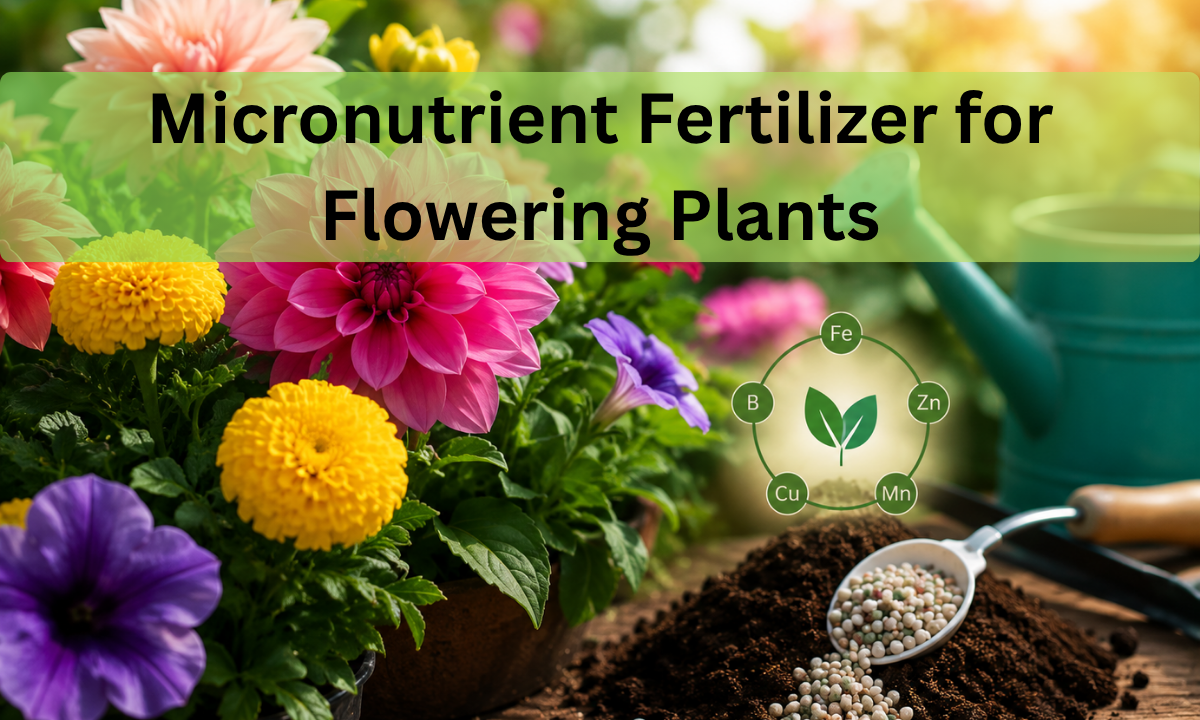
If you’ve ever wondered why two rose bushes planted side by side, watered the same way and fed the same NPK schedule, still turn out completely different — one loaded with fat, colorful blooms and the other struggling with pale leaves and thin buds — the answer usually isn’t nitrogen, phosphorus, or potassium. It’s micronutrients.
Most home gardeners and even many commercial growers put all their attention into NPK fertilizers and completely ignore the trace elements that actually control flowering. A good micronutrient fertilizer for flowering plants is often the missing piece between an average garden and a genuinely spectacular one.
Why Flowering Plants Need Micronutrients
Flowering is one of the most energy-intensive processes a plant goes through. It’s not just about leaves and stems growing — the plant has to build flower buds, produce pigments, transport sugars to the bloom site, and eventually set seed. Every one of these steps depends on trace elements that are needed only in tiny quantities, but whose absence causes visible, frustrating problems.
Also Read



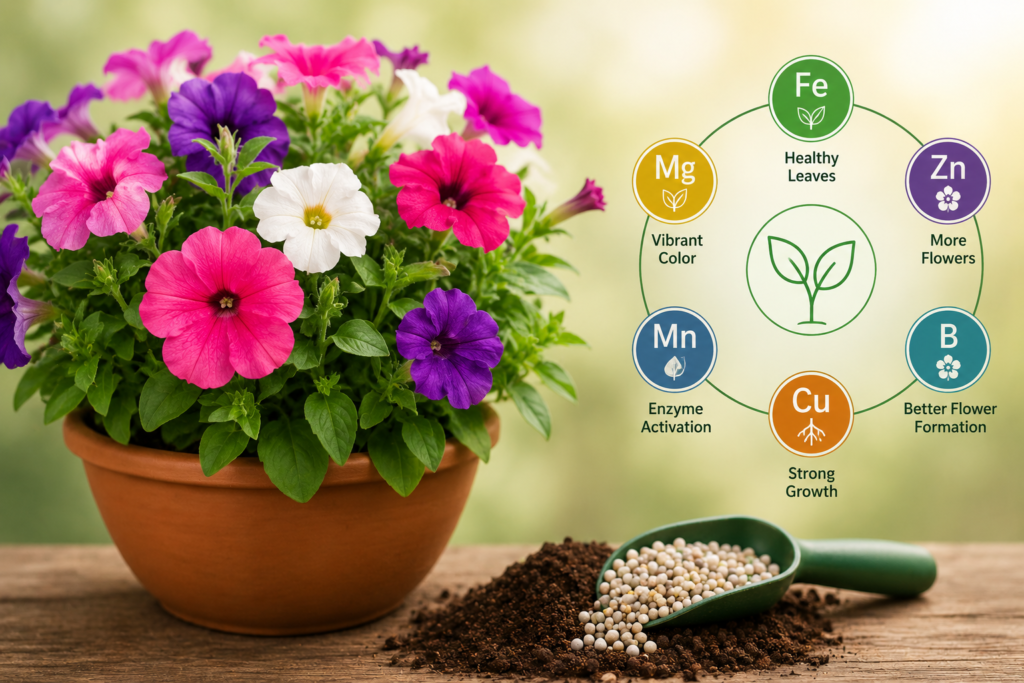
Here’s what the key micronutrients actually do during flowering:
- Boron – Directly controls flower bud formation and pollen viability. Boron-deficient plants often show poor bud set, deformed flowers, or buds that drop before opening.
- Zinc – Involved in hormone (auxin) production, which regulates flower initiation and even stem length. Low zinc shows up as small, distorted flowers and shortened internodes.
- Iron – Essential for chlorophyll formation. When iron runs short, the leaf blade fades to a pale, washed-out yellow while the network of veins holds onto its green color — a classic sign of interveinal chlorosis. A stressed plant like this simply won’t flower well no matter how much NPK you give it.
- Manganese & Copper – Support enzyme activity and overall metabolic efficiency, helping the plant convert nutrients into actual flower growth instead of just foliage.
- Molybdenum – Plays a role in nitrogen metabolism, indirectly affecting bud strength and flower size.
The tricky part is that micronutrient deficiency rarely announces itself clearly. Growers often blame the weather, watering, or “bad soil” when the real cause is one missing trace element.
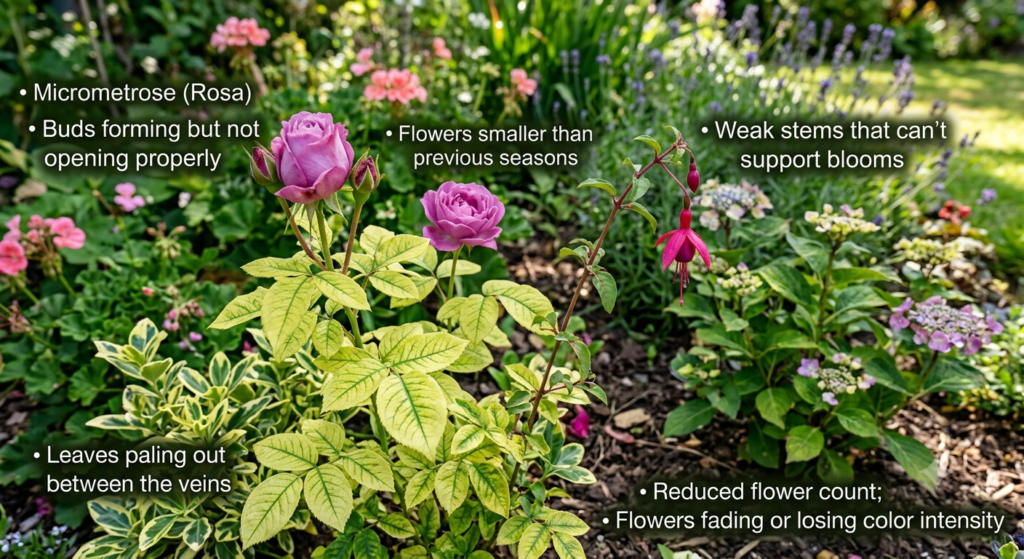
Signs Your Flowering Plants Need a Micronutrient Boost
- Buds forming but not opening properly
- Flowers smaller than previous seasons
- Leaves paling out between the veins while the veins themselves stay dark green
- Weak stems that can’t support blooms
- Reduced flower count despite regular NPK feeding
- Flowers fading or losing color intensity quickly
If two or more of this sound familiar, it’s a strong signal that your feeding program is missing trace nutrition — not that you need “more” fertilizer.
Why Chelated, Foliar-Applied Micronutrients Work Best
Soil-applied micronutrients can get locked up by soil pH, especially in alkaline or heavily limed soils where zinc, iron, and manganese become insoluble and unavailable to roots no matter how much you apply. This is exactly why a liquid, foliar-spray micronutrient fertilizer tends to outperform granular soil mixes for flowering crops — it bypasses the soil chemistry problem entirely and delivers nutrients straight through the leaf surface, giving a visibly faster response.
Chelated forms (nutrients bonded to an organic carrier molecule) are especially effective because they stay plant-available instead of reacting with soil minerals and getting “fixed” in an unusable form.
How to Use a Micronutrient Fertilizer for Flowering Plants
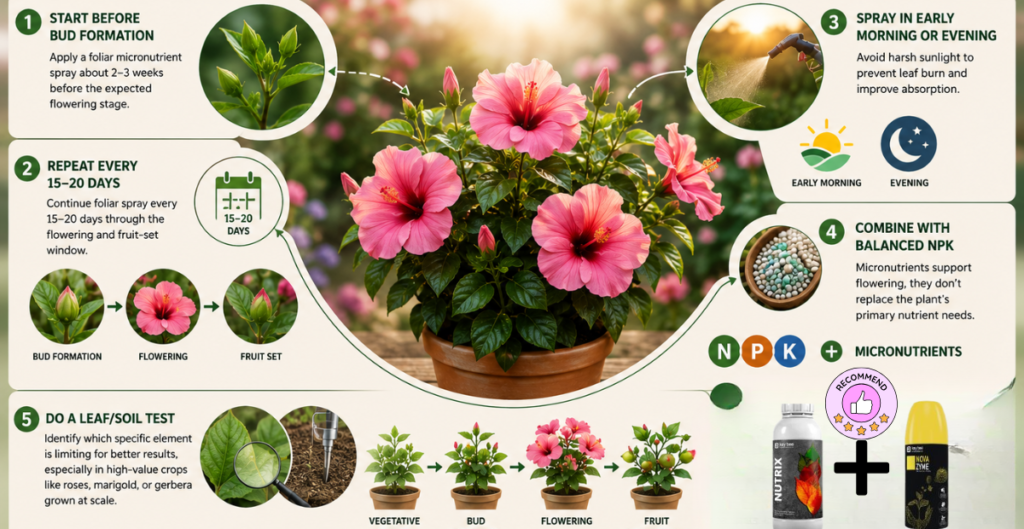
- Start before bud formation. Apply a foliar micronutrient spray about 2–3 weeks before the expected flowering stage so the plant has reserves built up when it needs them most.
- Repeat every 15–20 days through the flowering and fruit-set window rather than a single one-time application.
- Spray in early morning or evening to avoid leaf burn and improve absorption.
- Combine with a balanced NPK program — micronutrients support flowering, they don’t replace the plant’s primary nutrient needs.
- Do a leaf/soil test if possible to identify which specific element is limiting, especially for high-value crops like roses, marigold, or gerbera grown at scale.
One product worth looking at for this exact purpose is NUTRIX Liquid micronutrient fertilizer from Kay Bee Bio-Organics, formulated as a foliar-applied liquid trace-element mix designed to correct multiple micronutrient deficiencies at once and support crops through the vegetative, flowering, and fruit-development stages. For growers specifically chasing bigger blooms, pairing it with a seaweed-based flower booster like Nova Zyme can further support bud set and flower quality.
Simple Explanation in image
Final Thoughts
Bigger yields and better-looking flowers rarely come down to “more fertilizer” — they come down to complete fertilizer. NPK builds the plant’s structure, but micronutrients are what actually unlock flowering, colour, and bloom size. If your plants are growing fine but underwhelming you at bloom time, a targeted micronutrient fertilizer for flowering plants is very likely the missing link in your feeding schedule.
Have you tried foliar micronutrient sprays on your flowering crops? Share your results in the comments — always good to compare notes with fellow growers.