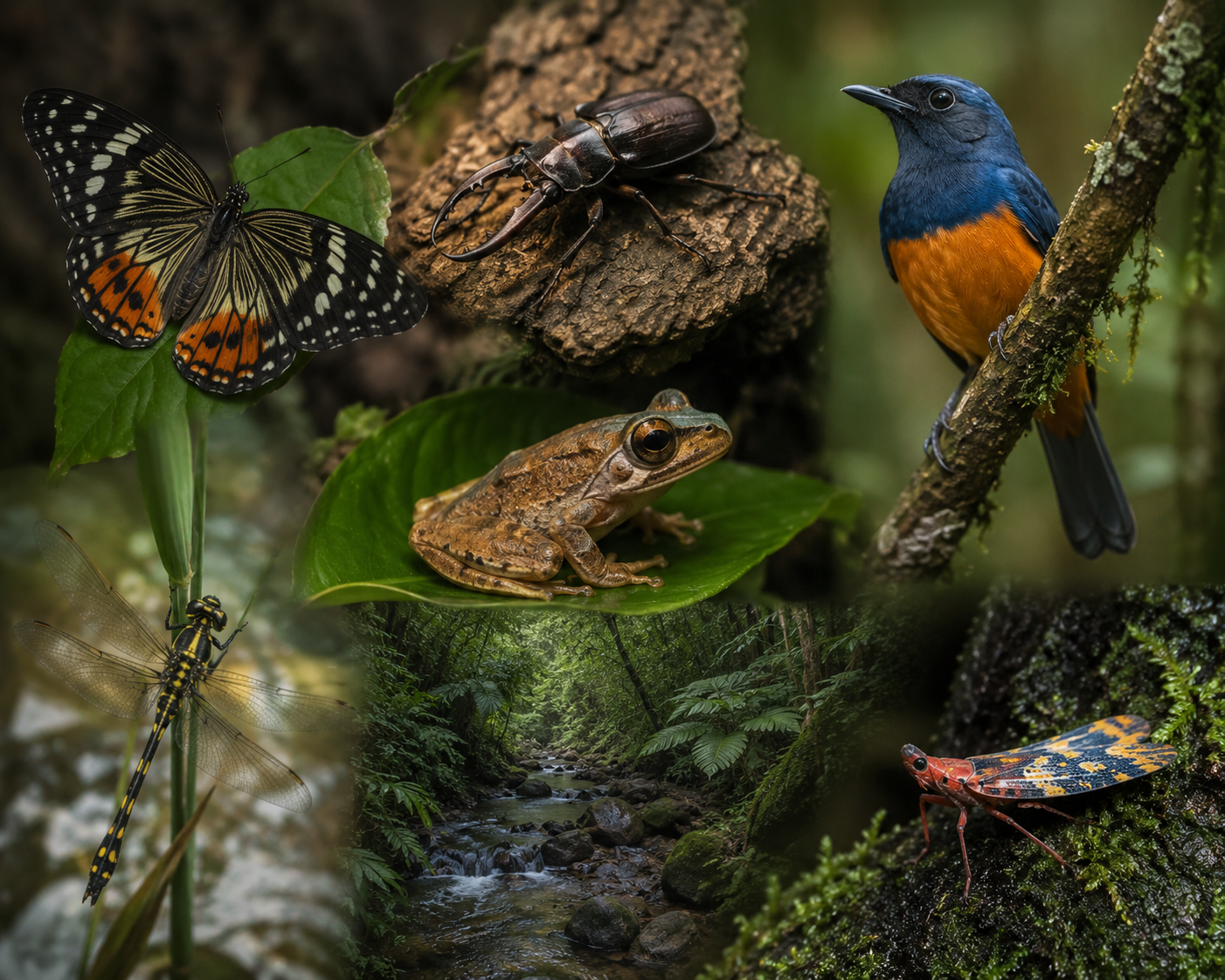
India Discovers 709 New Animal Species to Its Records — Here’s Where They Were Found
India’s tag as one of the world’s biodiversity superpowers just got a fresh boost. According to the Zoological Survey of India’s (ZSI) newly released “Animal Discoveries – 2025” report, the country added a record 709 new faunal records last year — the highest single-year count since systematic recording began. The findings were unveiled by Union Environment Minister Bhupender Yadav in Kolkata as part of ZSI’s 111th Foundation Day celebrations.
If you’ve ever wondered how scientists quietly keep expanding what we know about the natural world right in our backyard, this report is a fascinating glimpse into that ongoing work.
The Headline Numbers
Of the 709 new faunal records added in 2025, 483 species are entirely new to science — meaning they had never been documented anywhere in the world before. The remaining 226 species were already known to science but are being recorded in India for the first time.
Also Read



With these additions, India’s total documented faunal diversity now stands at 1,05,953 species, a figure that reinforces the country’s standing among the world’s megadiverse nations, accounting for roughly 5.3 percent of all documented animal species globally.
Which State Found the Most New Species?
Kerala leads the pack by a comfortable margin, contributing 98 new species discoveries in 2025 alone. It’s followed by West Bengal with 76 new species, Karnataka with 67, and Arunachal Pradesh with 65. This pattern isn’t entirely surprising — these states are home to some of India’s richest and most ecologically diverse habitats, including stretches of the Western Ghats, the Eastern Himalayas, and the Sundarbans mangrove ecosystem, all recognised biodiversity hotspots.
What Kind of Creatures Are We Talking About?
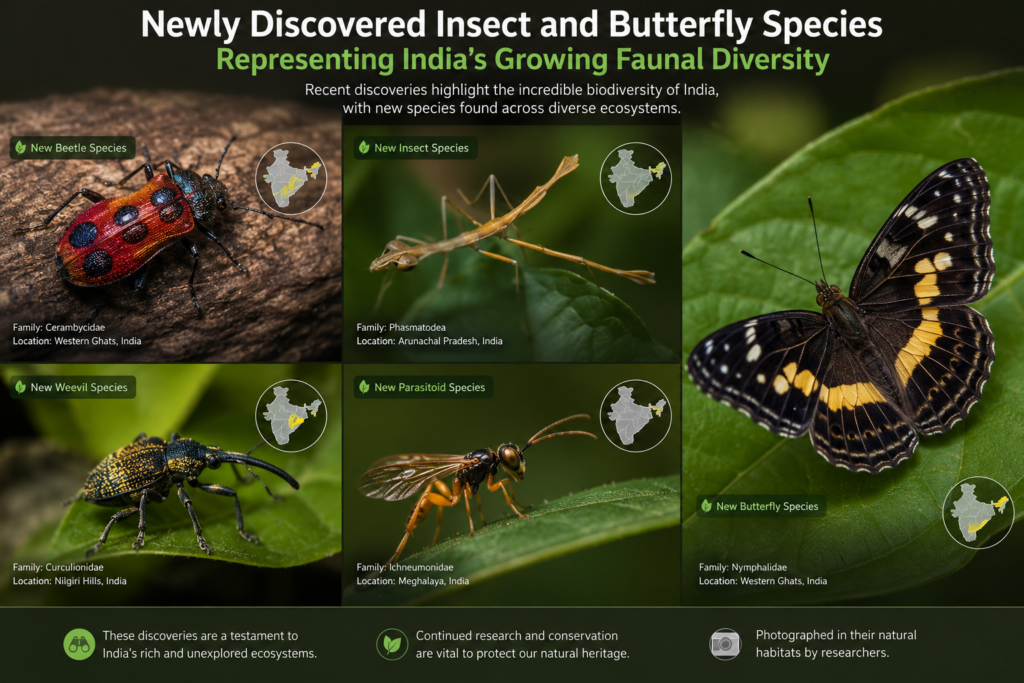
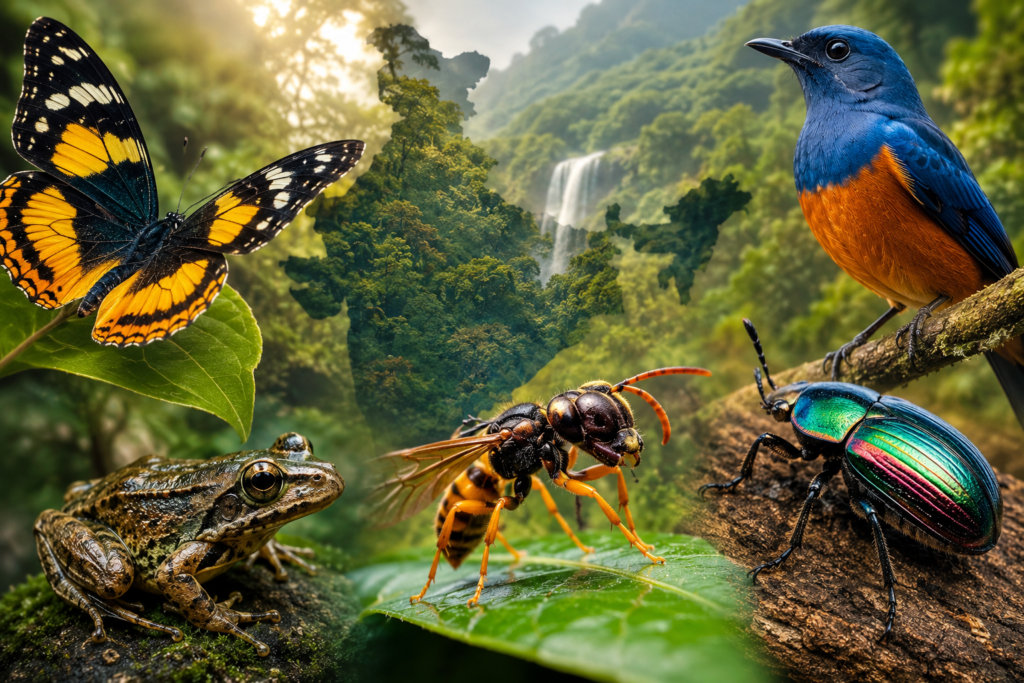
Insects dominate this year’s discoveries by a wide margin. Of the 709 total new records, 417 were insects, making up nearly 59 percent of everything found. Breaking that down further, Hymenoptera — the order that includes bees, wasps, and ants — contributed the highest number of additions at 106 species, followed by Lepidoptera (butterflies and moths) with 65, Diptera (flies) with 64, Arachnida (spiders and their relatives) with 64, and Coleoptera (beetles) with 55.
While insects rarely get the same spotlight as, say, a newly discovered frog or fish species, they play an outsized role in ecosystem health — from pollination to pest control to serving as a food source further up the food chain.
It’s Not Just Animals — Plants Got a Boost Too
Alongside the animal discoveries, the Botanical Survey of India (BSI) added 353 new plant taxa to the country’s floral records in 2025, including 14 infraspecific taxa. Interestingly, Arunachal Pradesh took the lead on the plant side of things, reflecting just how much unexplored botanical diversity remains tucked away in India’s northeastern forests.
A New Digital Tool: The PaleoIndia Portal
The event also saw the launch of the PaleoIndia Portal, a joint initiative between ZSI and the National Centre for Sustainable Coastal Management (NCSCM), Chennai, built using geological datasets from the Geological Survey of India. The portal documents fossil fauna spanning all 28 states and 8 Union Territories, and currently hosts information on more than 5,000 fossil specimens covering mammals, reptiles, birds, fish, amphibians, molluscs, arthropods, and more.
What makes this particularly interesting is the portal’s real-time data upload feature, which is designed to support citizen science participation — meaning ordinary field researchers, students, or even enthusiastic hobbyists could eventually contribute fossil-related documentation directly into a searchable national database.
Why This Matters Beyond the Numbers
ZSI Director Dr. Dhriti Banerjee described the findings as “much more than a testimony of taxonomic success,” pointing out that this kind of documentation directly feeds into how India and the world understand and respond to the ongoing global biodiversity crisis. Every newly documented species adds a data point that conservationists, policymakers, and researchers can draw on when making decisions about protected areas, climate adaptation strategies, or species-specific conservation programmes.
There’s also a quieter, longer-term angle here: researchers involved in the report have noted that many remote and still-unexplored regions of India likely harbour species that remain entirely undocumented, suggesting future editions of this annual report could well surpass this year’s record count.
A Tiger Reintroduction Update, Too
During the event, Minister Yadav also touched on plans for potential tiger reintroduction in West Bengal, citing Rajasthan’s Sariska Tiger Reserve as a template for how conservation efforts can bring back a lost tiger population. Sariska had lost all its tigers by 2008 but has since recovered to around 56 tigers through sustained reintroduction work. The minister indicated that a similar effort could be attempted in the Buxa forest area of north Bengal, which currently has no resident tiger population of its own.
Why This Story Deserves More Attention
Biodiversity reports like this one rarely dominate news cycles the way political or economic stories do, but they carry long-term significance for how India plans conservation policy, forest management, and even climate resilience strategy. A record year of discoveries also reflects sustained, often underfunded, field research work by taxonomists and scientists across the country — work that quietly expands humanity’s understanding of the natural world, one species at a time.
Frequently Asked Questions
1. How many new animal species did India discover in 2025? India added 709 new faunal records in 2025, including 483 species entirely new to science and 226 species recorded in India for the first time, according to the ZSI’s Animal Discoveries – 2025 report.
2. Which Indian state recorded the most new species? Kerala topped the list with 98 new species discoveries, followed by West Bengal (76), Karnataka (67), and Arunachal Pradesh (65).
3. What is India’s total documented faunal diversity now? With the 2025 additions, India’s total documented faunal diversity stands at 1,05,953 species, roughly 5.3 percent of the world’s total.
4. What group of animals had the most new discoveries? Insects led the count with 417 new species, about 59 percent of all discoveries, with Hymenoptera (bees, wasps, ants) contributing the highest number at 106 species.
5. What is the PaleoIndia Portal? It’s a new digital platform launched by ZSI and NCSCM that documents fossil fauna across India, hosting data on over 5,000 fossil specimens, with plans to support citizen science contributions.
Conclusion
A record 709 new animal species in a single year is a strong reminder that India’s forests, coasts, and hill ranges still hold plenty of scientific surprises. With Kerala, West Bengal, Karnataka, and Arunachal Pradesh leading the discoveries, this report reinforces both India’s ecological richness and the ongoing importance of sustained taxonomic research. Livenewsindia.in will continue to track biodiversity and conservation developments as they emerge.
