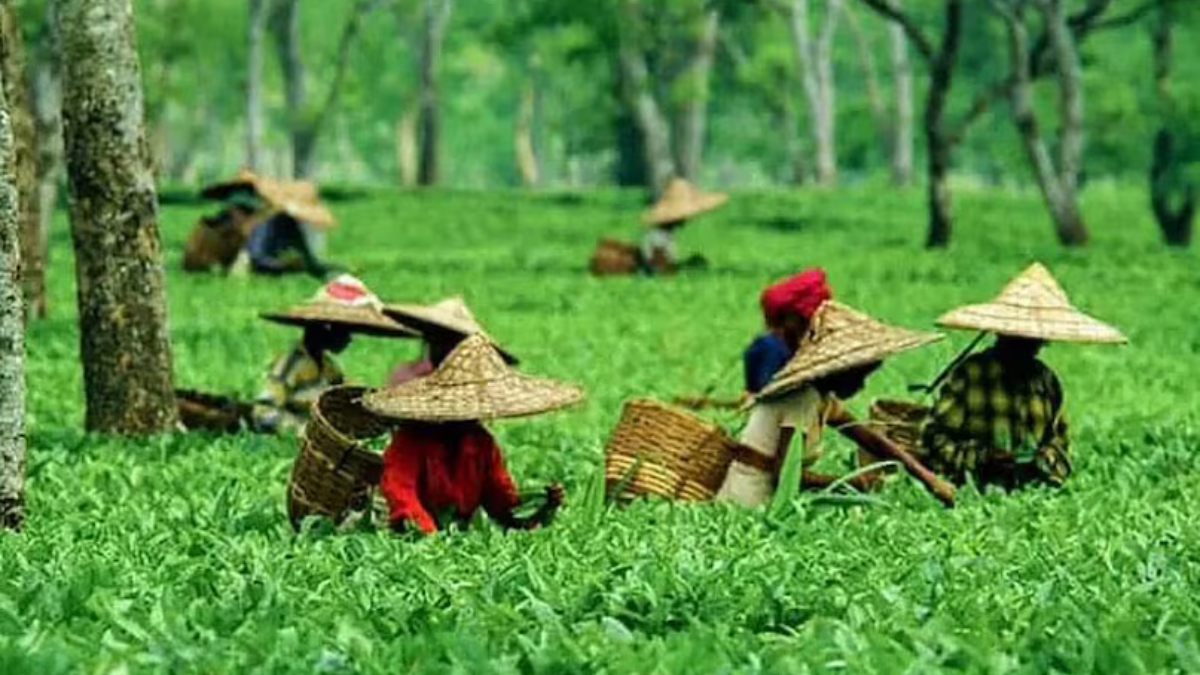
Assam is called the tea capital of India, where there are more than 800 tea gardens. The British East India Company laid the foundation of the tea industry here, which is world famous today.
Every day starts the day with tea, but do you know which state is known as the tea capital of India? No, then know that Assam is known as the ‘Tea Capital of India’. This state’s relationship with tea is deep cultural and historical. In this state, only tea is cultivated on hundreds of acres of land.

More than 50% of India’s total tea production is produced in Assam. There are also more than 800 tea plantations, many of which date back to the British colonial period. Because before this there was no interest in tea among Indians. It is said that it was the British who introduced the habit of drinking tea to the people of India.
Also Read : अजित पवार की मौत पर विपक्ष की गंदी राजनीति: संवेदनहीनता की हद पार | Dirty politics over Ajit Pawar death: Opposition crosses limits of insensitivity
History Of Tea Capital of India

The special climate and fertile soil of the Brahmaputra Valley makes it perfect for tea cultivation. Abundant rainfall, humid subtropical conditions, and nutrient-rich alluvial soils result in thick, rich, and malty tea. It is this special taste that makes Assam tea recognized all over the world.

However, Assam was not originally famous for tea. The British discovered wild tea plants here in the 1820s, transforming the region’s economy and identity.

In the early 1800s, the British East India Company attempted to challenge China’s tea monopoly. He sent botanist Robert Fortune on a secret mission to China, from where he smuggled tea plants and skilled workers to British-controlled India, especially Assam and Darjeeling.
Also Read : सावधान! आपके फोन से हो रही है जासूसी, Mobile App डाउनलोड से पहले ये चीजें चेक कर लें

Although Chinese tea plants imported by Fortune struggled to thrive in the humid climate of Assam, the British found wild tea plants thriving in the region. These native plants, identified as Camellia sinensis variety Assamica, were ideal for cultivation.

By the 1850s, tea plantations were established on a large scale in India. With this, the foundation of Assam’s world famous tea industry was also laid. These tea gardens not only support the country’s economy through trade but are also tourist destinations. Tourists come here every year.
