🌱 Introduction: Why Organic Farming Matters Today
Organic Farming in India : Agriculture has always been at the heart of India’s economy and culture. For generations, farmers depended on natural methods to grow crops, maintain soil fertility, and protect ecosystems. However, the shift toward chemical-intensive farming over the past few decades brought higher yields but also created serious challenges — declining soil health, rising production costs, and environmental damage.
Today, organic farming is not just a trend; it is becoming a necessary shift toward sustainable agriculture. Indian farmers, consumers, and policymakers are increasingly recognizing that long-term agricultural success depends on working with nature rather than against it.
Organic farming offers a path that supports productivity while protecting soil, water, and human health.
🌾 What Is Organic Farming?
Organic farming is a system of agriculture that avoids synthetic fertilizers, pesticides, and genetically modified inputs. Instead, it relies on natural processes to maintain crop health and soil fertility.
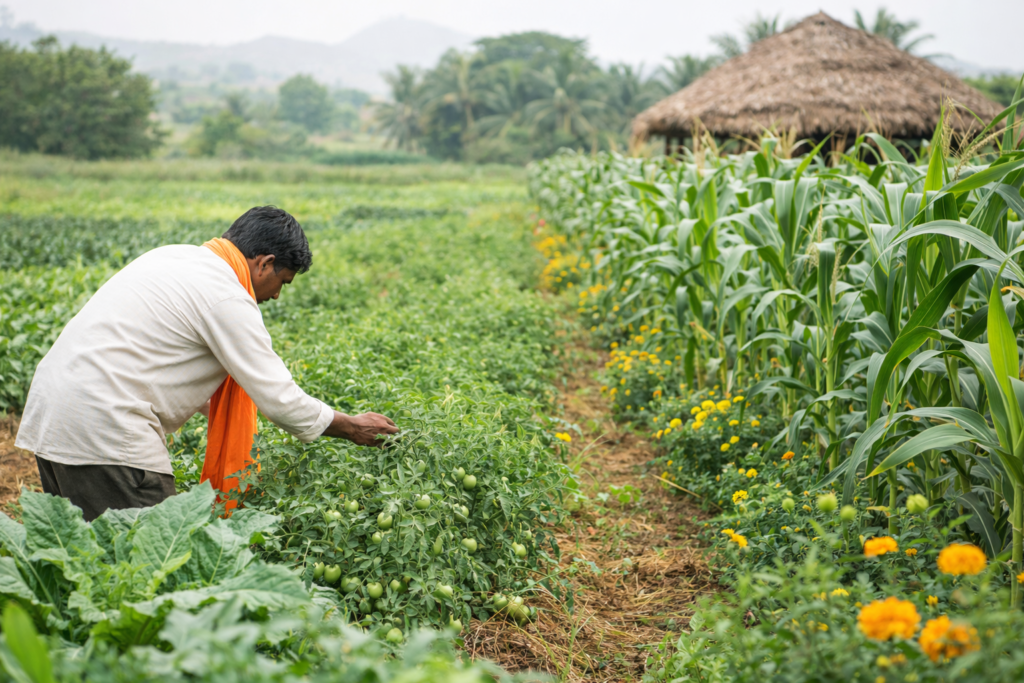
Common organic practices include:
Crop rotation and mixed cropping
Use of compost and farmyard manure
Biofertilizers and beneficial microbes
Natural pest management techniques
Conservation of soil biodiversity
The goal is simple: create a balanced ecosystem where plants, soil organisms, and the environment support each other naturally.
The Growing Importance of Organic Farming in India
- Restoring Soil Health
Many Indian agricultural lands are facing nutrient depletion due to excessive chemical fertilizer use. Organic farming improves soil structure by increasing organic matter and microbial activity.
Healthy soil retains water better, supports stronger roots, and ensures long-term productivity — something conventional farming often struggles to maintain.
- Healthier Food for Consumers
Modern consumers are becoming more aware of what they eat. Concerns about pesticide residues and food safety have increased demand for organic produce.
Organic crops are grown without harmful chemical sprays, making them a safer choice for families seeking clean and nutritious food.
- Environmental Protection
Chemical runoff from farms contaminates rivers, groundwater, and surrounding ecosystems. Organic farming reduces pollution by using biodegradable and natural inputs.
It also helps in:
Protecting pollinators like bees
Preserving biodiversity
Reducing carbon footprint in agriculture
- Economic Benefits for Farmers
Although organic farming may require an adjustment period, farmers often experience reduced input costs over time. Instead of purchasing expensive chemicals, they rely more on locally available organic resources.
Additionally, certified organic products can fetch premium prices in domestic and export markets.
- Climate-Resilient Agriculture
India faces unpredictable rainfall, droughts, and extreme weather conditions. Organic soils rich in organic matter retain moisture better and improve crop resilience during climate stress.
This makes organic farming an important strategy for climate-smart agriculture.
📊 Current Scenario of Organic Farming in India
India is among the leading countries in organic agriculture, both in terms of farmers involved and cultivated area.
Several states are actively promoting organic practices:
Sikkim – India’s first fully organic state
Madhya Pradesh – large organic cultivation area
Rajasthan & Maharashtra – growing organic adoption
Northeastern states – naturally suited for organic farming
Demand for organic spices, pulses, tea, and medicinal crops is growing rapidly in global markets.
🏛️ Government Initiatives Supporting Organic Farming
The Indian government has introduced multiple schemes to encourage farmers:
Paramparagat Krishi Vikas Yojana (PKVY)
Supports cluster-based organic farming and farmer training.
National Programme for Organic Production (NPOP)
Provides certification standards for exports.
Mission Organic Value Chain Development (MOVCDNER)
Strengthens organic farming in northeastern regions with market linkage support.
These programs aim to make organic farming economically viable and scalable.
⚠️ Challenges Facing Organic Farming
Despite its advantages, organic farming still faces practical challenges:
Limited awareness among farmers
Certification costs and procedures
Initial yield transition period
Market access issues
Lack of organized supply chains
Solving these challenges requires collaboration between farmers, private companies, and policymakers.
🔮 Future Trends in Organic Farming in India
🌿 1. Rise of Biological Inputs
Biofertilizers, microbial solutions, and plant-based crop protection products are becoming mainstream alternatives to chemicals.
📱 2. Digital Agriculture Integration
Mobile apps, soil testing technology, and precision farming tools will help organic farmers make data-driven decisions.
📦 3. Strong Direct-to-Consumer Markets
Online platforms and farm-to-home delivery models are connecting farmers directly with consumers, improving profitability.
🌎 4. Export Growth Opportunities
Global demand for organic food continues to rise, positioning India as a major supplier of organic agricultural products.
🌱 5. Corporate & Private Label Expansion
Food brands and agri-input companies are investing heavily in organic product lines and sustainable sourcing.
👨🌾 How Consumers Can Encourage Organic Farming
Consumers play an important role in strengthening organic agriculture:
Buy certified organic products when possible
Support local farmers’ markets
Learn about seasonal produce
Promote sustainable food habits
Every conscious purchase helps expand organic farming adoption.
Conclusion
Organic farming in India represents a return to balanced agriculture — combining traditional wisdom with modern scientific understanding. As soil health concerns, climate challenges, and food safety awareness continue to grow, organic agriculture is set to become a central pillar of India’s farming future.
With proper support, innovation, and consumer participation, organic farming can create a more sustainable, profitable, and environmentally responsible agricultural system for generations to come.
FAQ
Q1. Why is organic farming important in India?
Organic farming improves soil health, reduces chemical pollution, and provides safer food while supporting sustainable farmer income.
Q2. Is organic farming profitable in India?
Yes, due to reduced input costs and premium market pricing, organic farming can become profitable over time.
Q3. What is the future of organic farming in India?
Growing consumer awareness, government support, and export demand indicate strong future growth.
India’s First Botanical-Based Organic Agricultural Company
Kay Bee Bio Organics (visit https://kaybeebio.com/) holds a unique place in India’s agricultural landscape as one of the first truly botanical-based organic agricultural companies in the country, focusing on plant-derived solutions rather than synthetic chemicals. From its base in Pune, this company has worked closely with farmers over many years to develop pest and disease management products that are effective yet gentle on the land, soil, and people who depend on farming for their livelihood.
What sets Kay Bee Bio Organics apart is their commitment to creating organic, residue-free crop protection inputs that are suitable for sustainable and export-oriented farming. Instead of pushing harsh chemicals, they use botanical ingredients and rigorous research to produce biopesticides, bio fungicides, and other organic formulations that help farmers reduce costs, protect biodiversity, and grow healthier crops. Their certified organic products are designed to work in harmony with nature, making them an important pioneer as India moves toward more ecological agriculture.
Read More Farming News – Click Here
